

There is no (to)Morrow
a postmortem on Norway's battery posterchild's demise

Morrow Batteries announced they were filing for bankruptcy on 6th May 2026. Shortly before Northvolt’s bankruptcy, we posted a teardown on what had been going on there, stating that ‘Battery production is genuinely difficult,’ a position we stand by. The dust has settled a bit, so it’s time for us to take a look at the Norwegian collapse.
The lead up to 2020: Lithium Sulfur
Morrow Batteries was founded in 2020, but with roots originally registered back in January 2014. It was a 2020 joint venture between Agder Energy Ventures, and lithium sulfur battery company Graphene Batteries, which folded its assets, people and IP into Morrow.
The original idea of lithium sulfur was superseded by the realisation that pure Li-S was too immature to be commercially viable, as well as the reality that China was rapidly dominating in manufacturing for conventional lithium ion. Building factories, not just R&D, was the conversation within the European battery ecosystem: with Northvolt breaking ground in 2018, Tesla Berlin announced in 2019 and European OEMs keen to secure home grown European batteries for their EVs.
2020: making plans
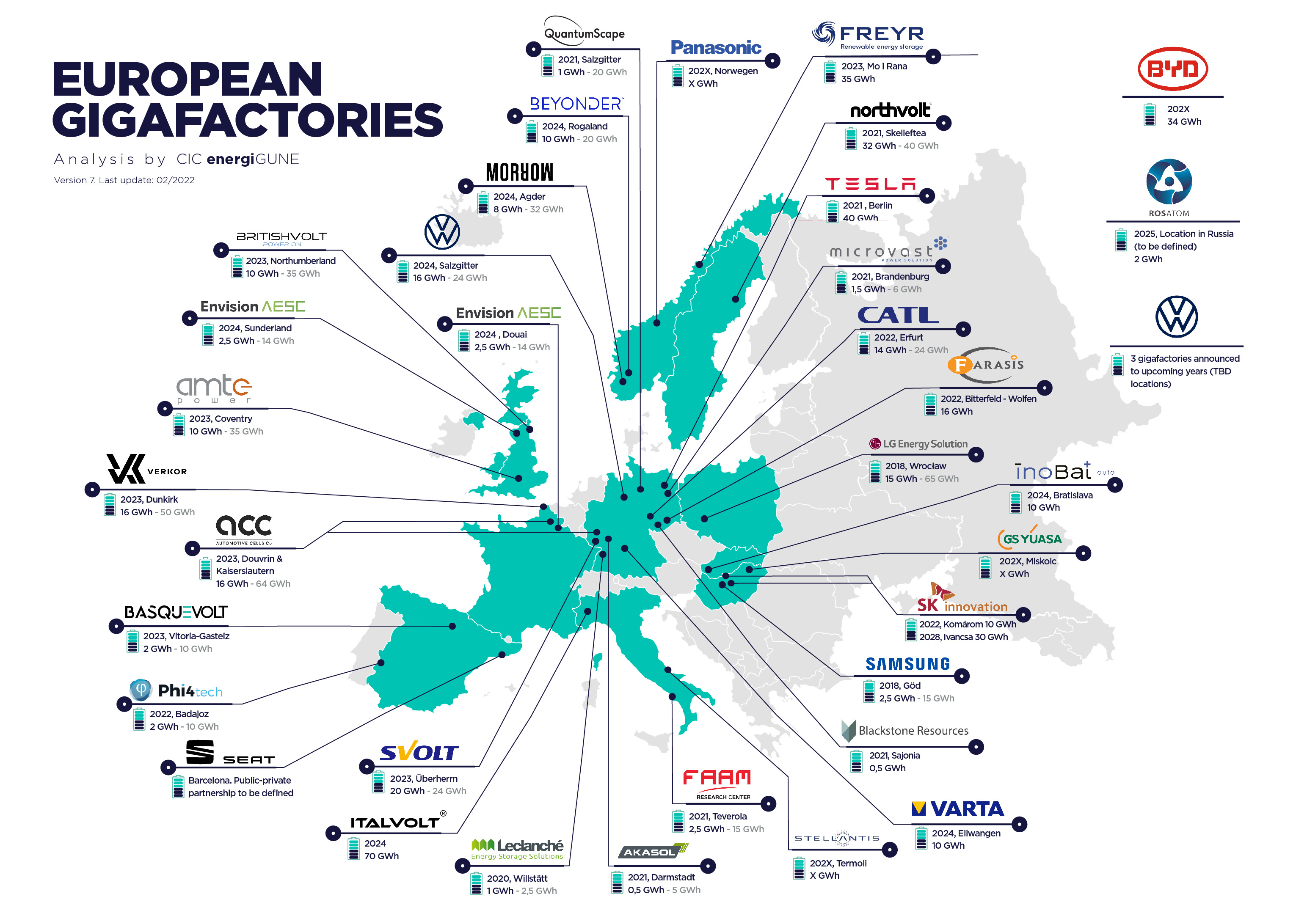
The original factory plan was for a 32 GWh factory in four 8GWh modules, beginning with existing battery tech and eventually focusing on graphene enhanced Li-S from the IP they inherited from Graphene Batteries. This was to use sulfur from the Norwegian oil industry as a home grown supply chain.
In December 2020 the location for the gigafactory was chosen as Arendal, Norway due to the location having excellent clean energy, water and transport connections. The new plan was to build firstly a 1 GWh phase of current lithium ion tech, up and running by the end of 2024, followed by a 42 GWh factory, all of which would use clean energy from hydropower to enable low CO2 emissions.
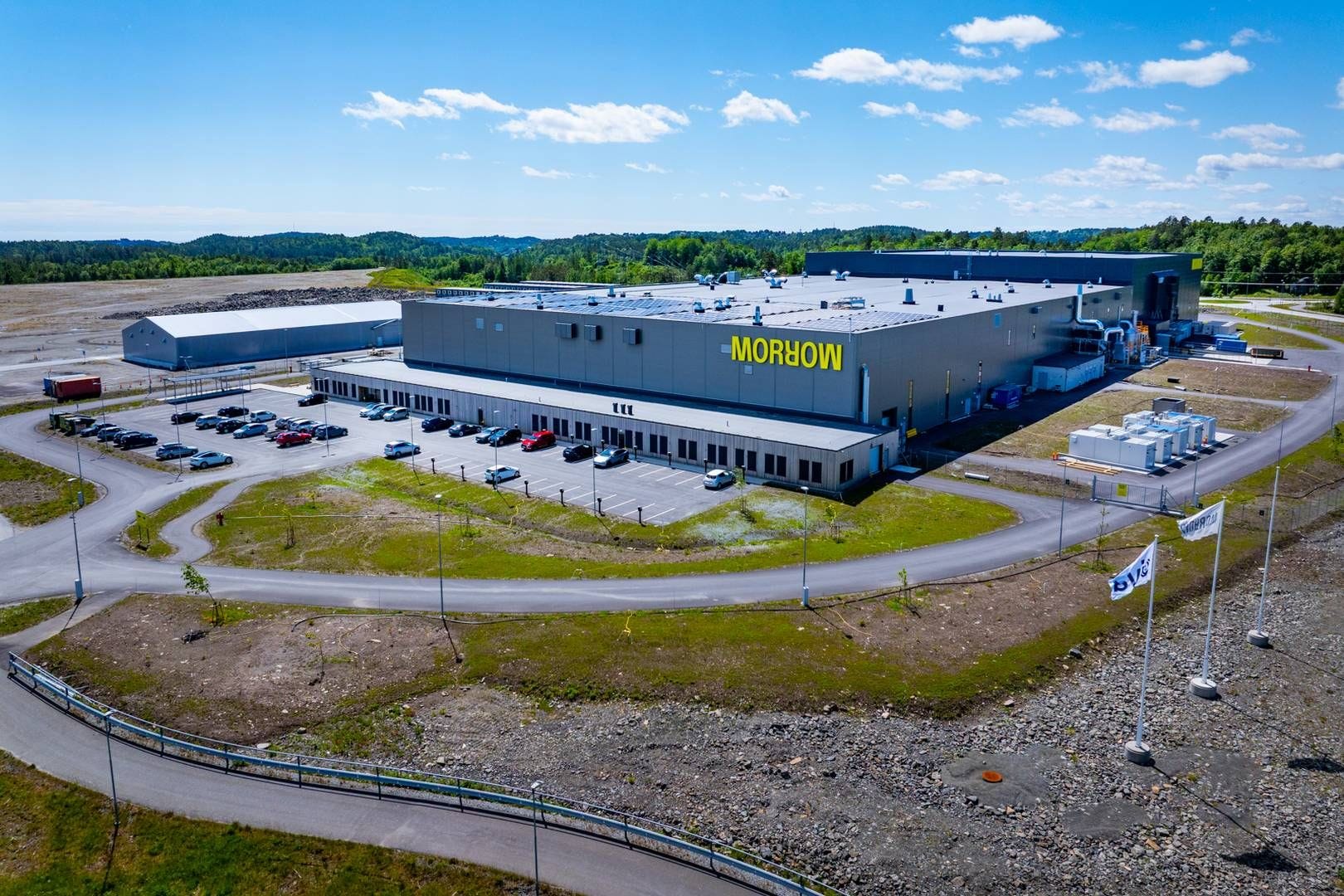
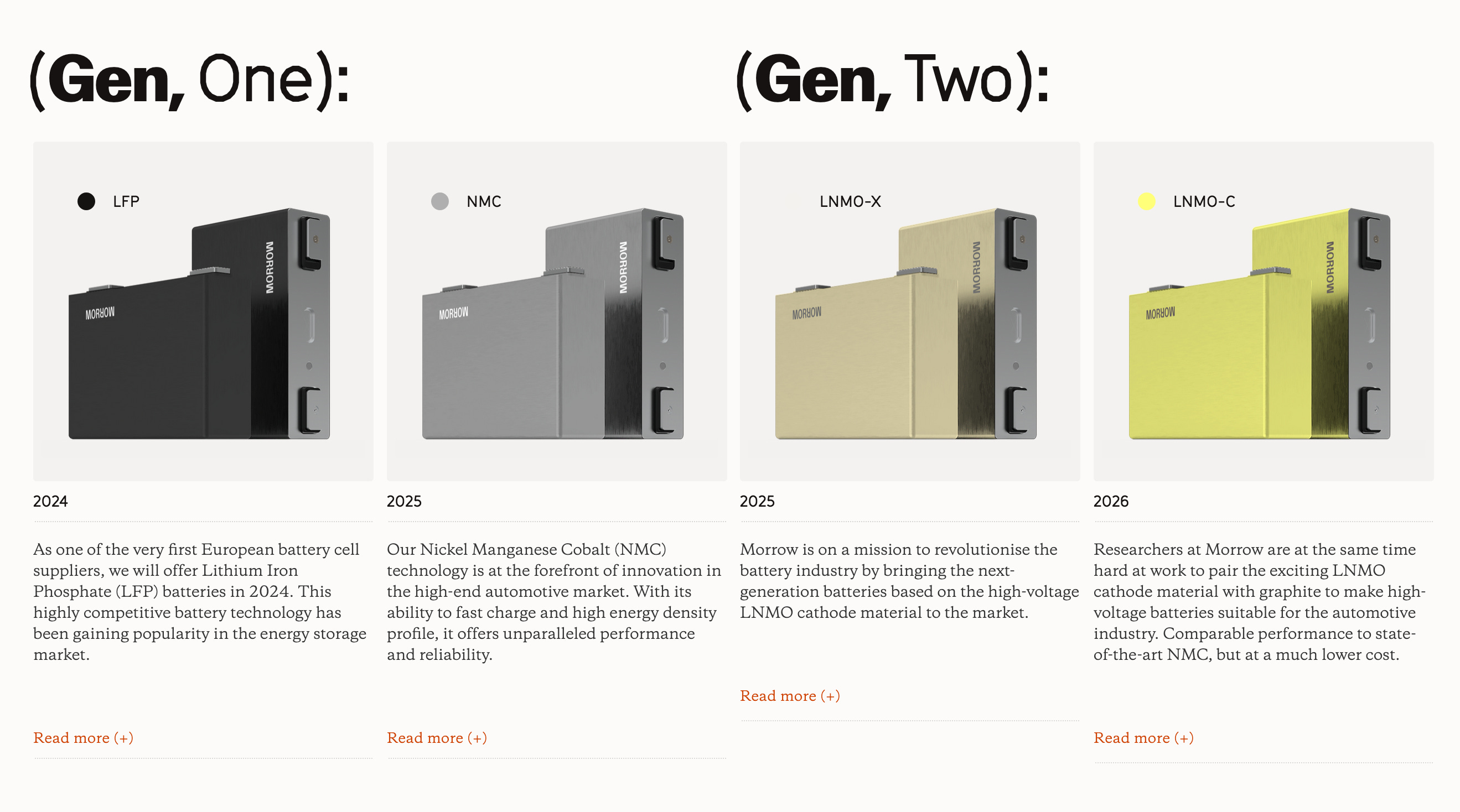
Morrow chose their initial focus to be LFP to differentiate themselves from the crowd of high nickel chemistries promised to the European market at the time. Northvolt was focused on NMC811, as well as a lot of the other main projects announced at the time.
The next generation R&D was to focus on NMC as well as LMNO-C (LMNO with a graphite anode) for high voltage applications, as well as LMNO-X (LMNO with a niobium based anode) for heavy mobility applications. LMNO is a very high voltage cathode, which makes electrolyte decomposition a key issue, and stabilising cells a real challenge.
2021-2023: raising money, shipping samples and qualifying the process in South Korea
Jump forward to August 2021 and Morrow raised ~€21 million in a round led by the Danish pension fund PKA. The founding shareholders NOAH and Agder Energi Ventures also put in additional capital, with the municipal government in Arendal putting in significant capital, as well as a large €2 million grant from Innovation Norway.
Then in 2022, they raised €100 million in an equity investment round led by Siemens Financial Services and ABB, primarily to pay for equipment for the first factory. They also signed a supply deal with British company Echion Technologies for their XNO niobium based anode material as well as Haldor Topsoe for LMNO cathode, signalling confidence in the development of their own R&D in the LMNO-X technology.
The founding CEO, Terje Andersen, left in June 2022, citing a new phase for the company as they began building the factory. He was replaced in December by Lars Christian Bacher, who brought 30 years experience from Equinor as their CFO.
By March 2023, they had an operational Customer Qualification Line in South Korea training engineers and, importantly, shipping sample LFP prismatic cells. That June back in Norway, they opened their own R&D centre at the campus of the University of Agder.
In September they raised €70 million from their existing owners Å Energi, PKA, Siemens Financial Services, ABB and Nysnø, The customer qualification line was packed up in South Korea and shipped back to Norway, and started arriving from October.
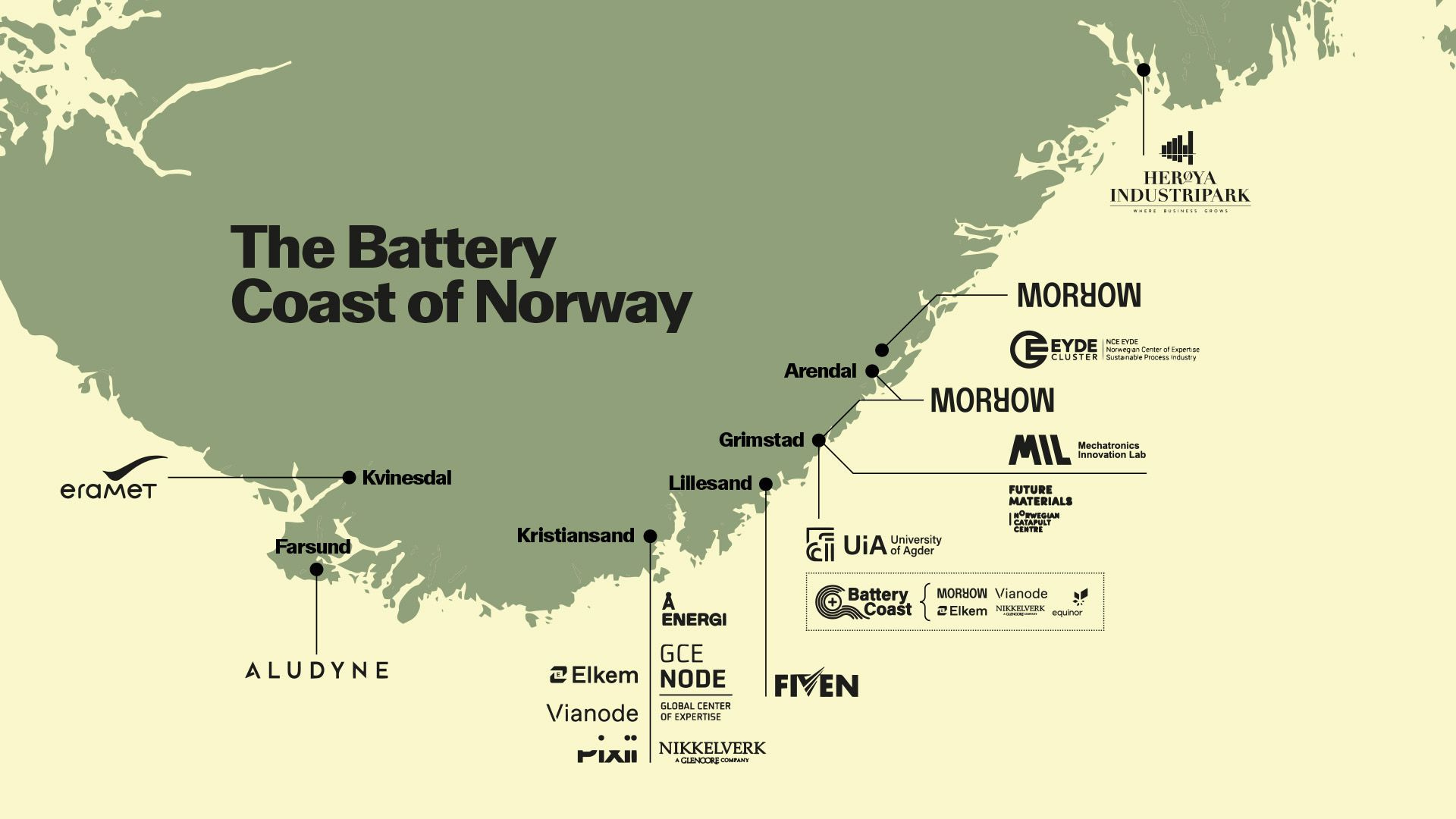
The company positioned themselves within the ‘Battery Coast’ ecosystem, with graphite manufacturer Vianode, Glencore’s Nikkelverk and several other energy related companies as neighbours and collaborators. What they were trying to build was an ecosystem, not just a battery factory in the far flung north like Northvolt Ett in Skellefteå.
2024: things become unstuck
In April, the first major off-take agreement was signed for 5.5GWh over 7 years for Nordic Batteries, who would develop the cells into modules and packs.
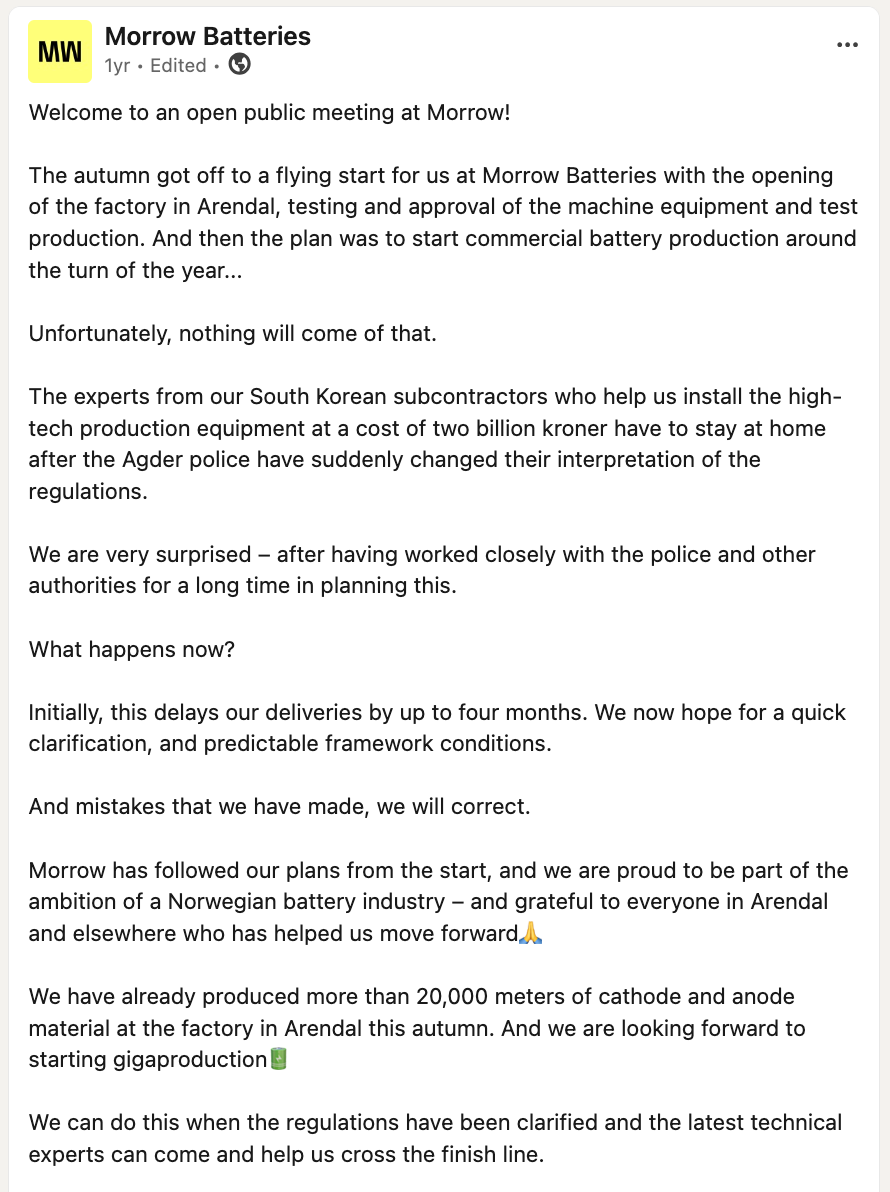
The customer qualification line had arrived in containers, and all that was left to get the 1GWh facility up and running was installation and commissioning in Norway. In November, Morrow posted, interestingly in Norwegian only, about a problem they were having with the immigration authorities over their subcontractors coming from South Korea to install the line, which affected about 15 subcontractors. The beginning of production, which had been planned for the third quarter of 2024, was pushed back while they argued with the municipal immigration to get their subcontractors into the country.
Then, in December, Innovation Norway granted the company a ~€140 million loan (1.5 billion NOK) for the factory’s scale up, but importantly this loan came with staggered pricing, the first 500 million NOK at 5.73%, 400 million NOK at 11.23% and the final 600 million NOK at 5.73%. This money was expensive, and so at bankruptcy it seemed that only 300 million NOK had been spent of one part of this funding.
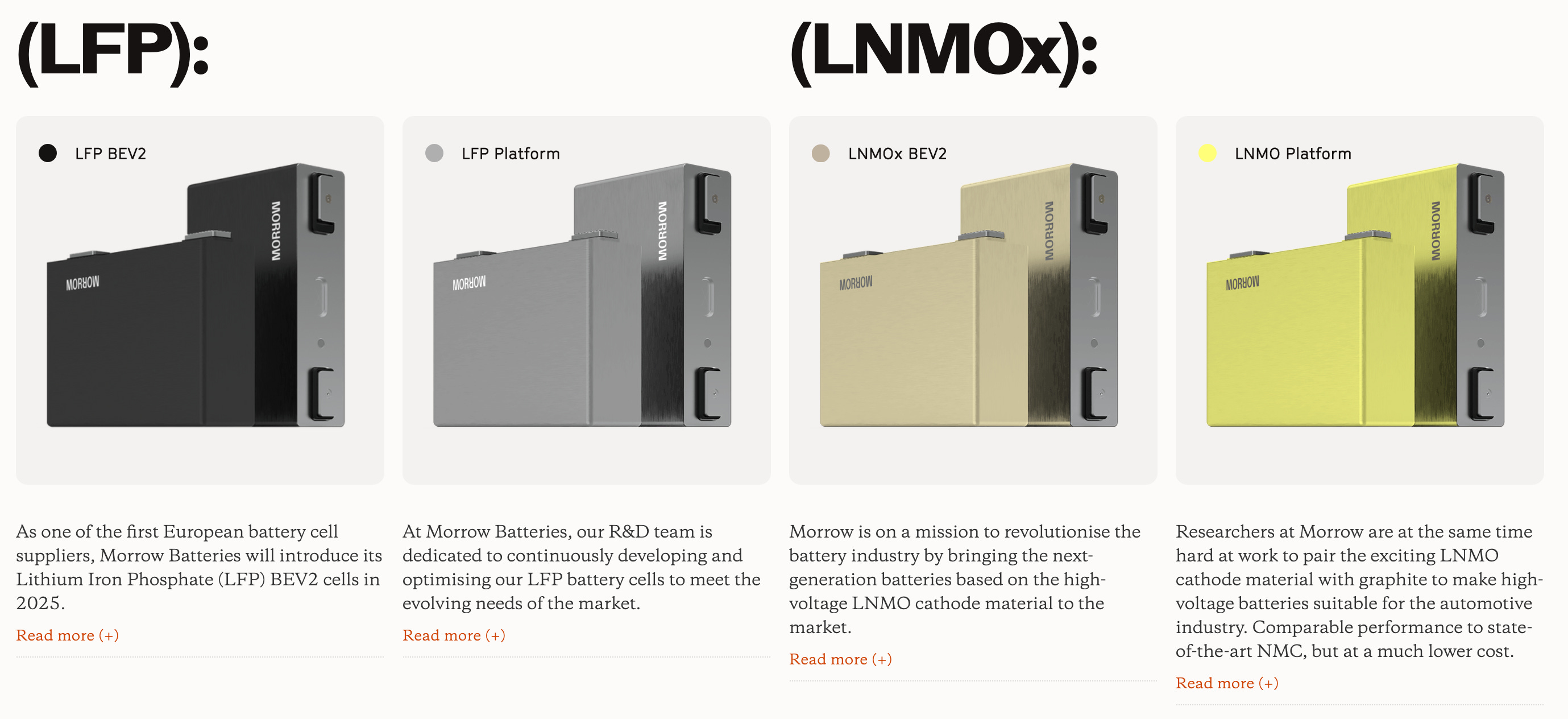
At some point in 2024 Morrow also pared down their ambitions to just LFP and next generation LMNO-X, wiping off NMC due to a lack of customers. From 2024 integrated annual report, ‘a strategic decision has been made to focus resources on the development of LFP and LNMO’ and as such ‘all development costs related to the NMC project have been written down to zero’ as well as ‘the goodwill from the acquisition of Graphene Batteries in 2020 has also been written down to zero.’
2025: lay offs amid the rest of the European battery dream crumbling
The immigration issue cost the company about 100 million NOK, or about ~€9 million, and 4 months of delay. This meant laying off ‘about 50-60 employees’ and closing the company labs in Kjeller, near Oslo.
In March 2025, Northvolt declared bankruptcy with over $8 billion in debt, putting immense pressure on the other European battery companies as finance became extremely wary of losing big chunks of money in the same way.
In April, the COO leaves and goes back to South Korea, in May there is a new Chair of the Board and the CTO leaves, and in November the VP of Sustainability departs to go back to academia. Then finally, in an already turbulent year, that December CEO Lars Christian Bacher left the company, framed as a ‘strategic direction’ change, replaced by the CSO and a cofounder Jon Fold von Bülow. We actually interviewed Lars Christian Bacher in September, just months before he left, when he was optimistic about the company’s direction.
2026: supply agreements start coming in, too little too late
In January with their new CEO, Morrow started looking for a commercial partner now they are manufacturing cells. A long term agreement until 2031 was signed for LFP cells for Proventia in Finland, to be used in off-highway and industrial applications. March saw an announcement at InterBattery Korea of a partnership via Memorandum of Understanding with Korean electrode foundry specialist JR Energy Solution, aiming to build a scalable European hub for high-performance electrode services. On the 17th April, they entered into an agreement with a German defence company following a 12 month validation process of their cells.
Just two and a half weeks later, on 6th May, Morrow Batteries filed for bankruptcy. Their integrated annual report from 2024 admits that ‘at the current rate of cash consumption, securing additional funding will be critical to sustain operations. Based on current assumptions, the Company is forecasted to have sufficient liquidity until the first half of 2026,’ which, it turns out, was a pretty good forecast.
As Miguel Pereira, Director of Process Engineering, wrote, ‘it takes many factors to succeed, but a single one is often enough to fail,’ citing the main reason of failure as the lack of patient investors in this capital intensive business. For Morrow to have worked, there needed to be an acceptance of the first few years being unprofitable, a reality across European battery ventures, with the profit motive presenting a huge challenge to the long term ramp up required.
As we see it, the main issues Morrow faced came down to three key things:
they were not profitable making LFP: they allegedly had enough customers to offtake the 1GWh they were capable of producing, but it would have taken several years for this offtake to start making any money, as discussed by Miguel Pereira. Equally, these customers had to be happy paying a premium for a European LFP cell when they could probably buy a better product from China, massively narrowing the potential customer base.
their next generation chemistry wasn’t working: Morrow’s main bet was on making LMNO cells work, which would have defined them in the European market and made them money. Unfortunately, this is a notoriously difficult chemistry, and despite whispers of breakthroughs from the team it wasn’t ready for commercial production yet.
they had no ownership of the supply chain: they bought all of their materials from China. Cathode, anode, electrolyte; it was all from China with no short term plans to make LFP in Norway that we can see. Until they made LMNO work, they were entirely reliant on Asian know-how and materials.
These factors are also common to pretty much any European venture.
Morrow did a lot of things right: they learnt from South Korea, extensively qualified the line before bringing it over, worked with the state and private investors and focused on just one technology with a next generation project in the wings. What they achieved on a team of less than 200 workers was a true feat of persistence. We wish each and every one of them the best.
🌞 Thanks for reading!
📧 For tips, feedback, or inquiries - reach out
📣 For newsletter sponsorships - click here
Immigration law that prevents people who have jobs from coming to work is 1. insane and 2. is crippling industrial development, in Europe and elsewhere.